What does a self-reliant stay mean?+
Camp gives your group a remote, off-grid base to enjoy together. Guests arrive prepared for the season, changing Lake Superior conditions, and their planned activities, with enough water, food and personal supplies for their stay. Read and download the guest manual before traveling, confirm access with your hosts, and be comfortable following the camp instructions. Your group also cleans and resets camp before checkout so it is ready for the guests who follow.
What does a booking include?+
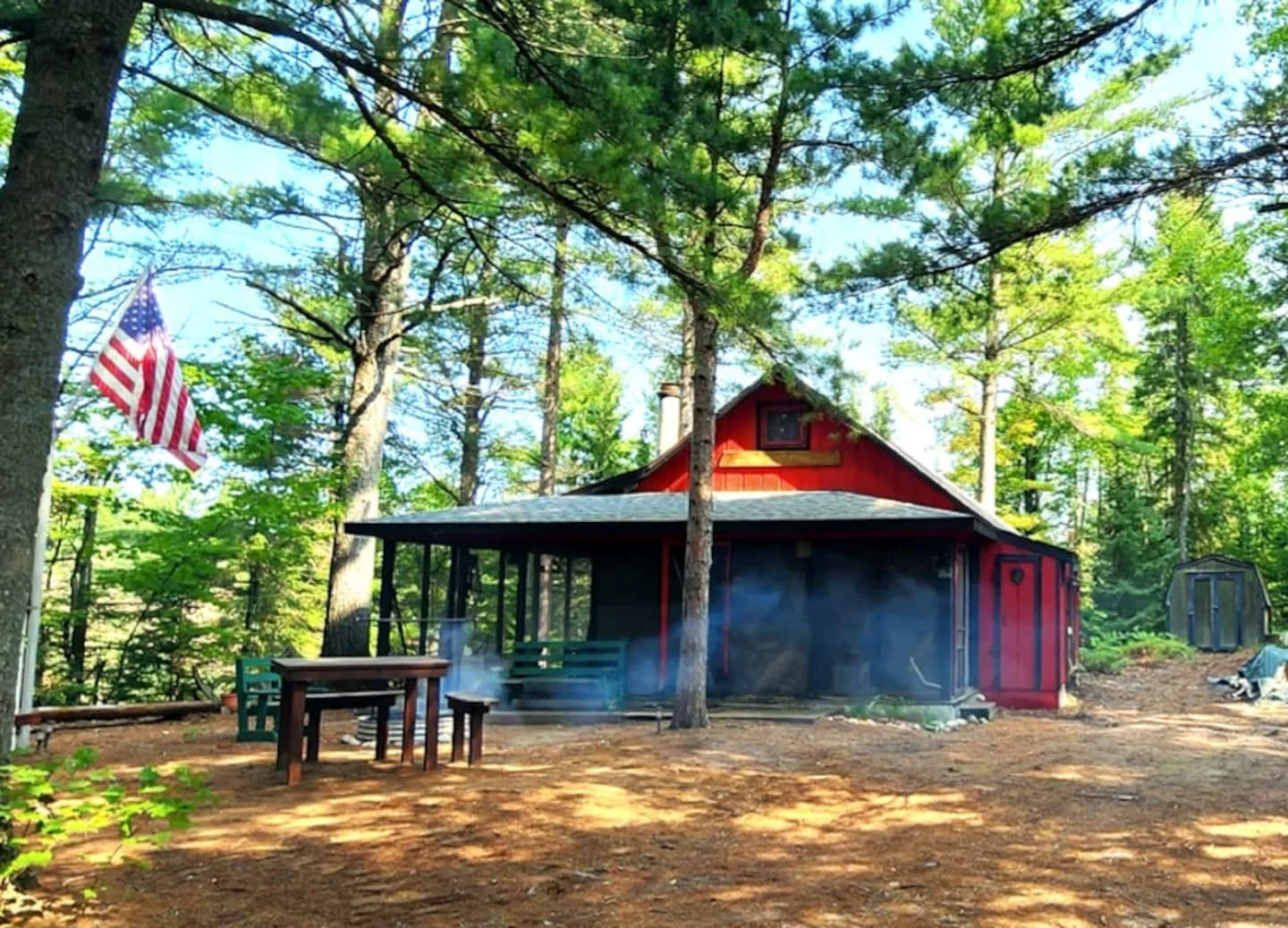
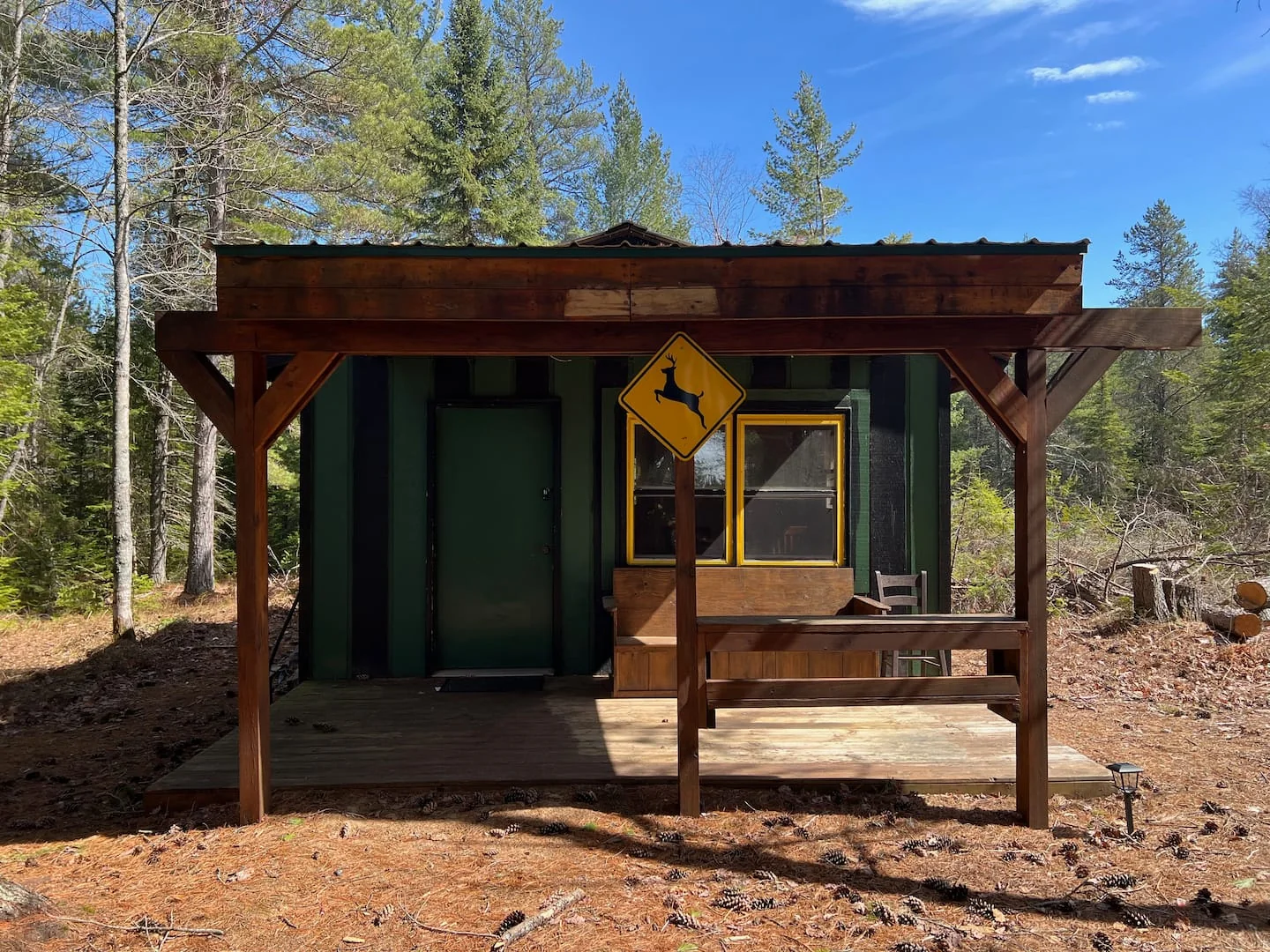
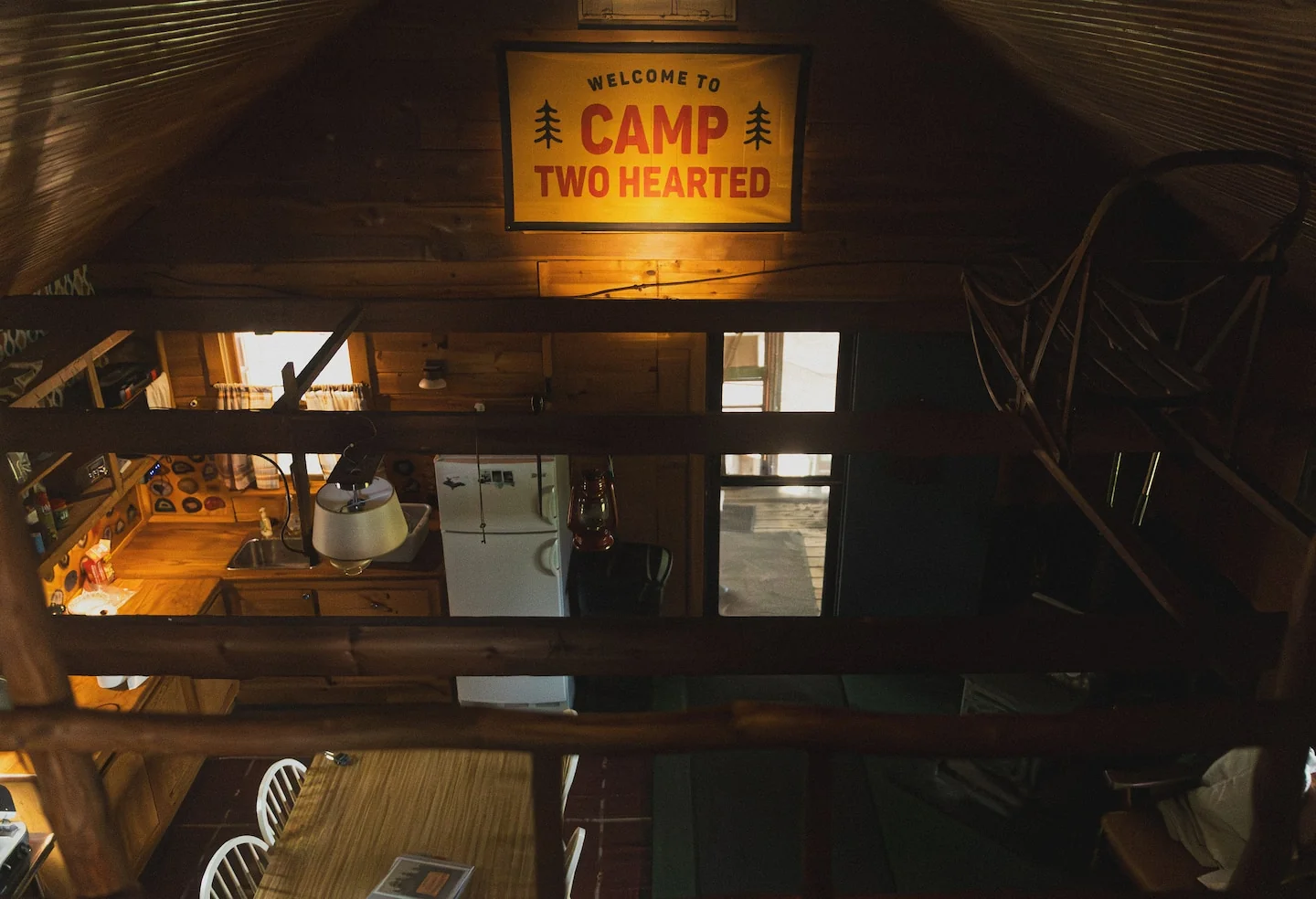
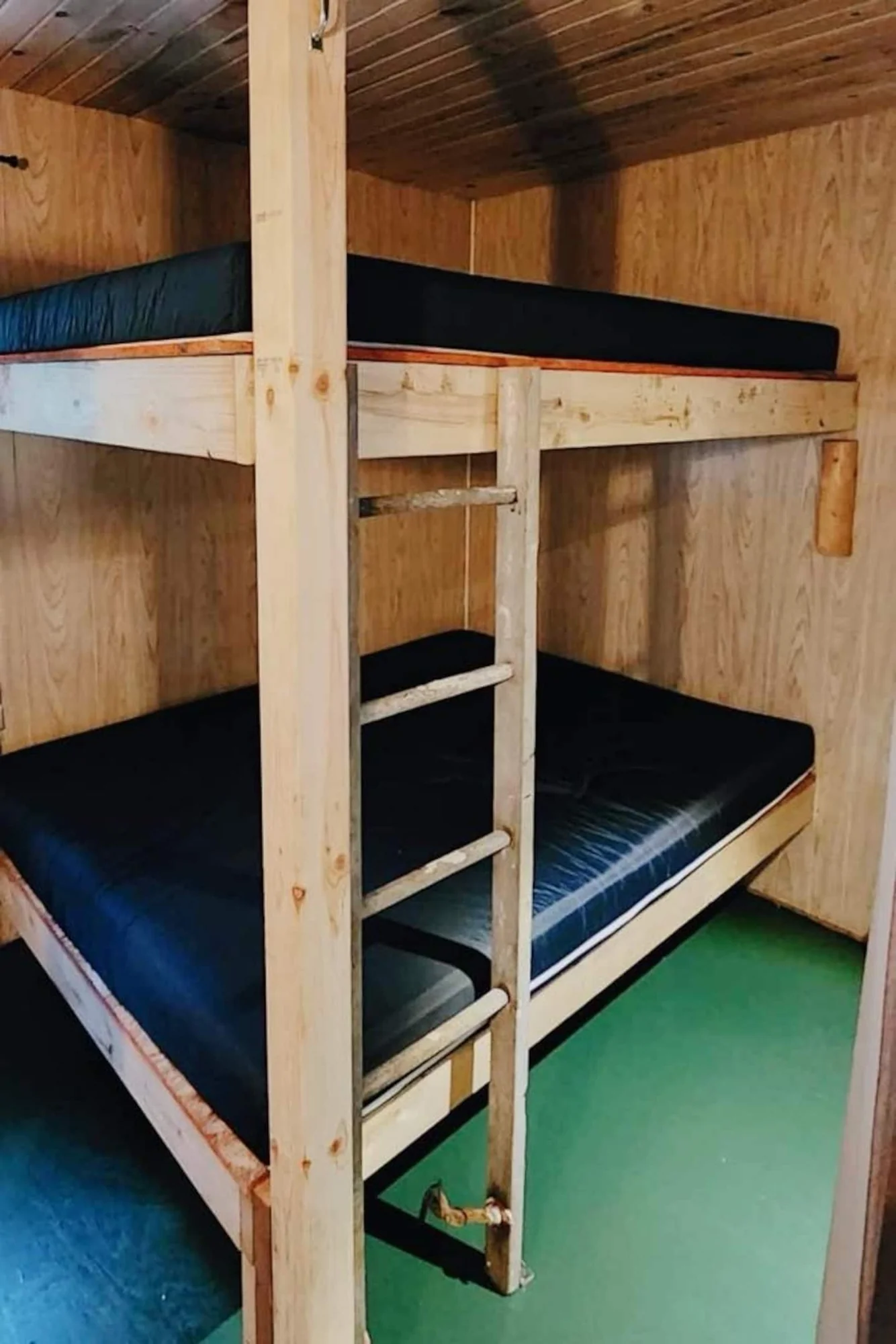
The main cabin, separate bunkhouse, and private camp grounds are rented together for one group. The main cabin has two semi-private queen sleeping rooms with curtain doors, a loft with two twin beds, and a queen air mattress. The bunkhouse has four queen beds arranged as bunks and its own living area. For more than 16 guests, contact the hosts before making plans.
What are the water, power, and restroom arrangements?+
The cabins have no indoor running water. Bring water for drinking, cooking, and washing dishes. The seasonal outdoor shower and sink use non-potable river water. The restroom is a rustic outhouse. Power comes from a limited solar and battery system with generator support, so guests need to be comfortable following the camp instructions.
How do we get to camp, including in winter?+
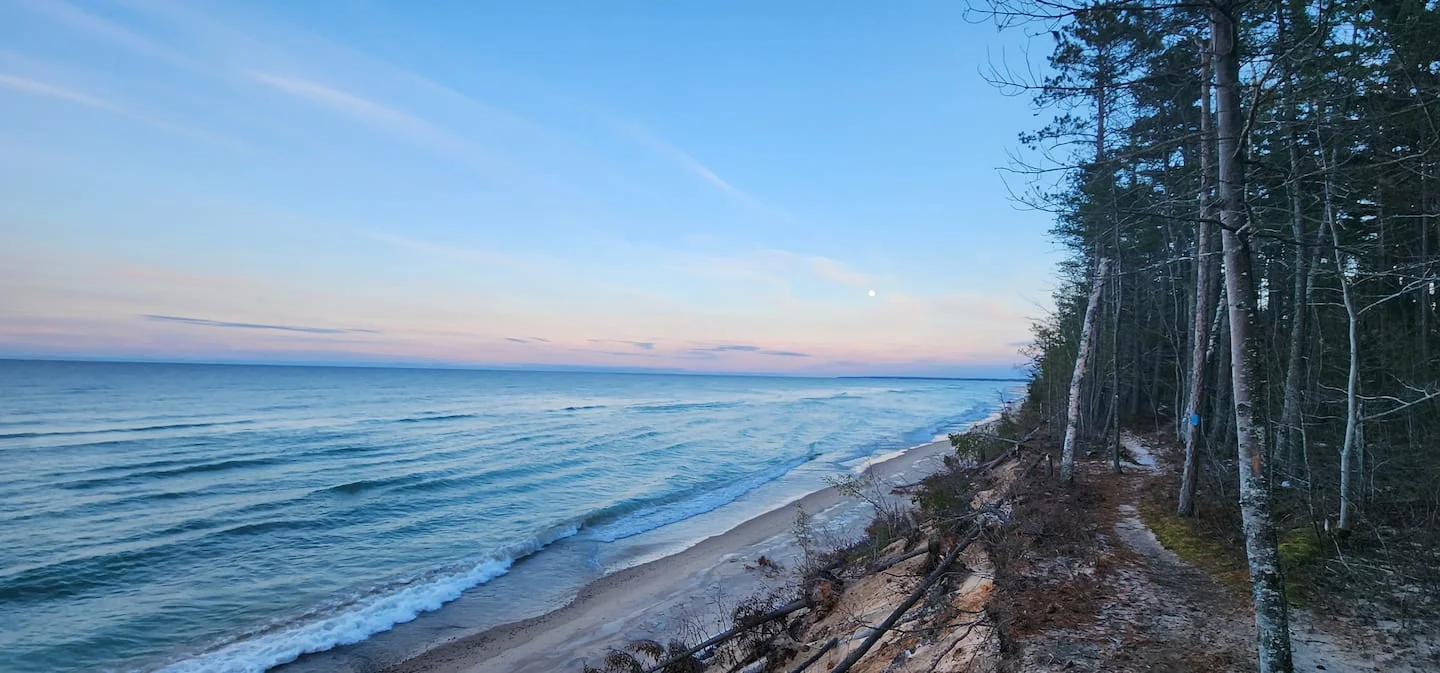
Camp is near Newberry and the Reed and Green Bridge on a seasonal road. AWD or 4x4 is strongly recommended. Winter drive-in access is not guaranteed, and snowmobiles may be required. Road and trail conditions change with the weather; agree on your access and parking plan with the hosts before booking. Lake Superior is roughly a mile away as the crow flies, rather than a one-mile road trip.
Is the river easy to access?+
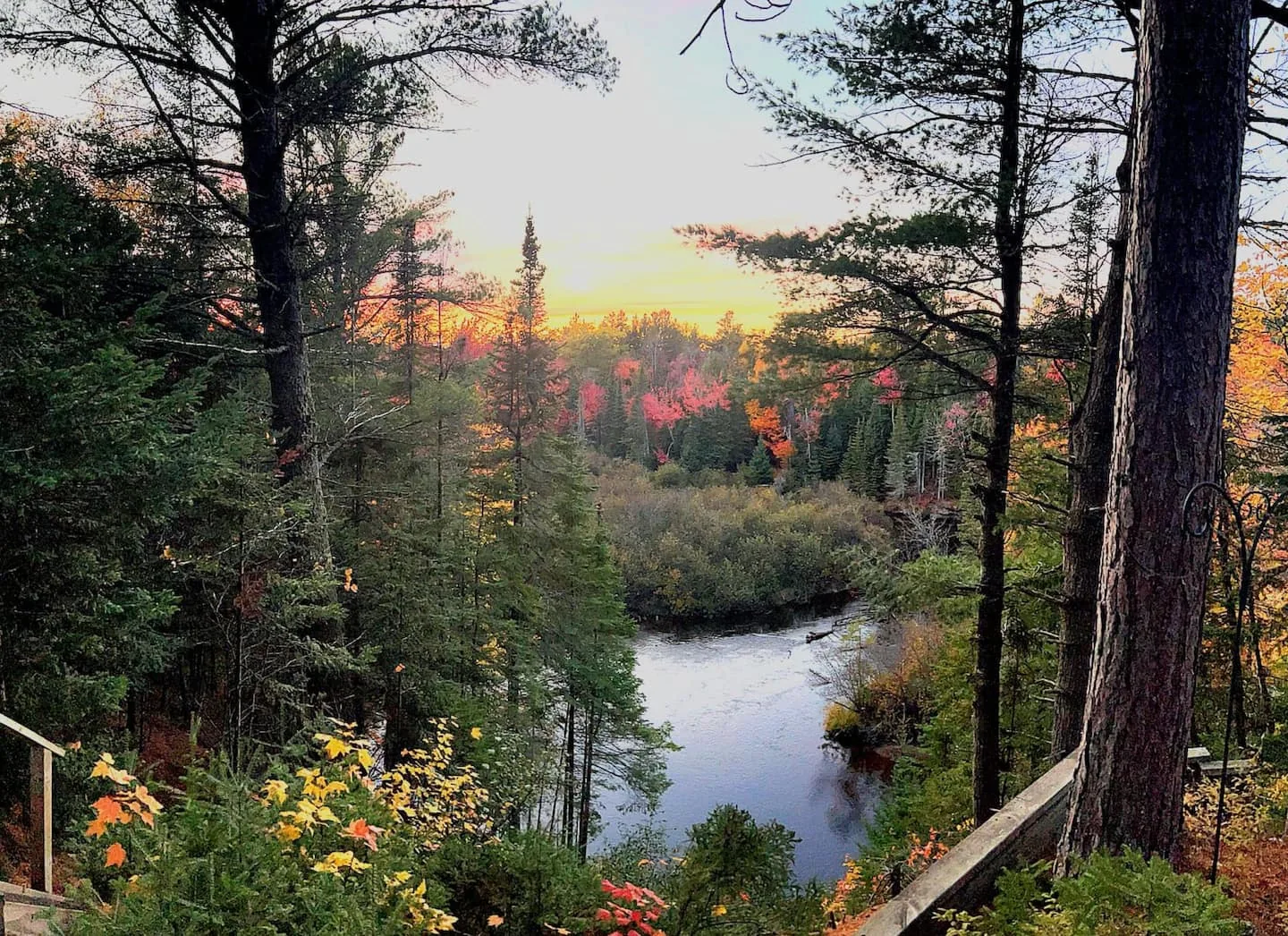
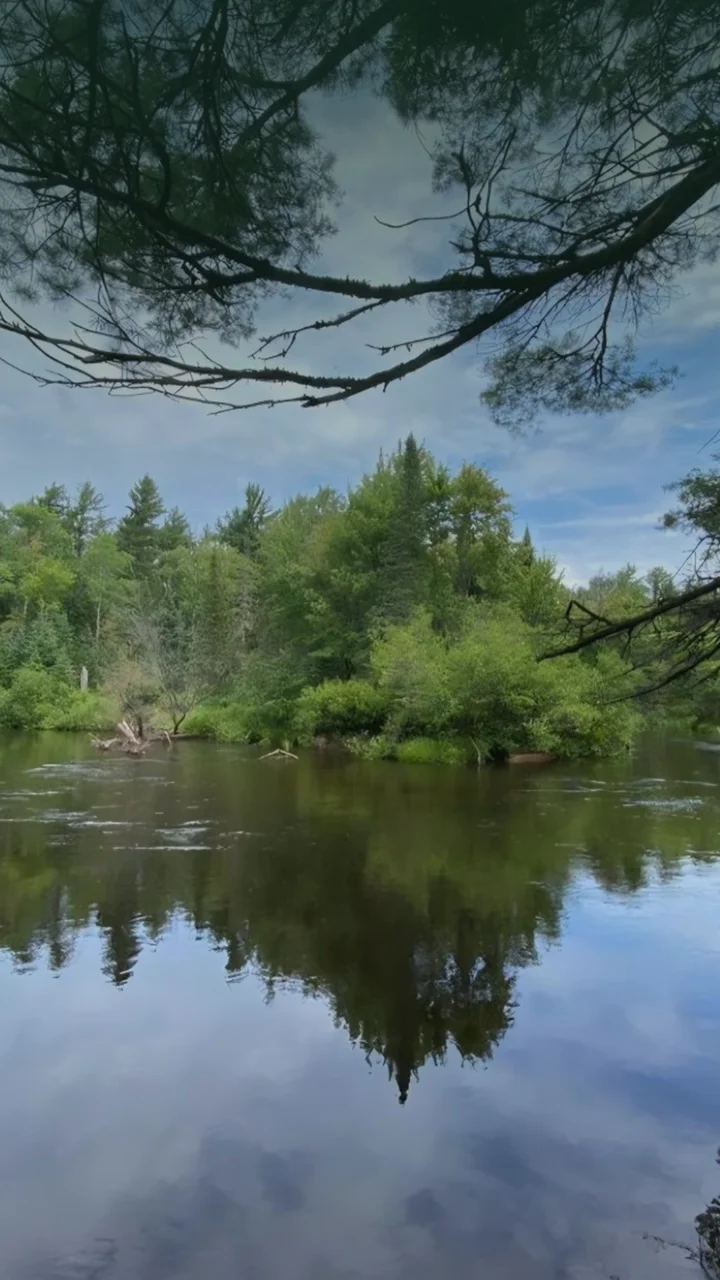
The main cabin sits roughly 65–70 feet above the Two Hearted River. A steep, rustic path with a support rope leads down to the river. It may not be suitable for everyone. Supervise children closely and discuss access needs with the hosts before booking. River conditions and fallen trees can affect paddling routes.
What should we pack and download?+
Prepare for a self-reliant stay: bring ample food, drinking and cooking water, warm and waterproof layers, lights, personal first-aid supplies, and the equipment you need for the season and your activities. Confirm bedding needs with the hosts. Lake Superior conditions can change quickly; check forecasts and be ready to adjust your plans. Hosts can assist by text or call, and a cell booster helps guests communicate from camp. Reception can still vary, so download the guest manual, directions, and offline maps before leaving town. Stock up on fuel and essentials before the remote part of the drive.
Can we use the sauna and boats?+
The wood-fired sauna, kayaks, and canoe are part of camp. Check current availability and equipment with the hosts, and use the detailed guest instructions. The sauna takes advance preparation, and the river path is steep. Plan a paddling route for the current conditions and your group’s experience.
What should we do before leaving?+
Camp keeps the nightly price simple with no cleaning fee. Because no cleaning crew visits between stays, please leave camp clean and ready for the next group: wash and put away dishes, wipe kitchen surfaces, sweep floors, tidy the cabins and grounds, and return camp equipment to its place. Pack out all trash and take your food and belongings with you. Keep food and trash secure during your stay. Follow the guest manual for securing camp, shutting down systems, and fully extinguishing fires. Thank you for helping everyone arrive to a welcoming camp.
How do direct booking and payments work?+
Choose dates and submit a request. Your hosts review availability and the stay details before approval. The displayed nightly rates plus applicable taxes are your stay price, with no cleaning fee or extra camp charges. Taxes, cancellation terms, and payment arrangements are confirmed before you pay. A request alone does not reserve dates.